Author: Kosta Peric, Deputy Director, Inclusive Financial Systems, the Gates Foundation
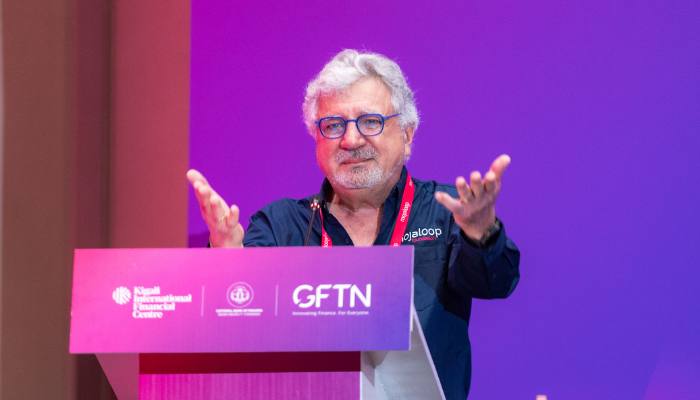
Earlier this month in Kigali, Rwanda, leaders from across the ecosystem gathered to look ahead to what comes next for inclusive instant payment systems across Africa. MojaCom 30, held as part of the Inclusive Fintech Forum’s IIPS Track, was a time to reflect on the progress already underway and the work still ahead.
Progress over the past decade has shown what is possible when payment systems are designed to be interoperable, inclusive, and trusted. That progress has created both momentum and responsibility as countries plan the next phase of payment system development. Looking toward 2030, the focus now shifts from expansion alone to durability—ensuring that the systems being built today continue to serve economies and communities well into the future.
Why Inclusive Instant Payment Systems Matter
We care deeply about the future of payment systems because payments are often people’s first entry point into the financial system. When payment systems function well, they expand opportunities for individuals, families, communities, and even entire countries. It’s crucial to ensure that payment systems are reliable, safe, and affordable.
This becomes clear in the most ordinary transactions, such as a small business owner receiving payment from a customer, a farmer sending money home to family members, or a government paying teachers and health workers.
Every day, trust is earned or lost in seemingly small moments like these. It only takes a single moment of failure for a user to lose trust in the system and stop using it altogether. Reliable, trusted payment systems at a national scale are therefore foundational to long-term financial inclusion.
Looking ahead, we have set an ambitious goal for all African nations to have an IPS by 2030. This goal is challenging, but recent progress across the continent shows clear momentum. So far, 25 countries across Africa have an IIPS in place. Meanwhile, five countries are currently developing an IIPS, and 12 more countries have instant payment systems, but they are not yet inclusive.
What Recent Progress Tells Us About What Works
One of the reasons I am so confident about the future is that we have already seen extraordinary progress in expanding financial access over the past two decades. According to the2025 Global Findex report, in 2011, only about 42 percent of adults in low- and middle-income countries had an account in the formal financial system. Today, roughly 75 percent of adults in developing economies have an account. About 2 billion more people now have access to financial services.
We have also seen important progress in reducing the gender gap in financial access. What was once about a nine-percentage-point gap between men and women has narrowed to roughly five. Behind these numbers are millions of households gaining tools to manage their financial lives—to save, to transact, and to participate more fully in the economy.
This progress has been driven by a community of partners working together to modernize financial systems and expand opportunity. Governments are modernizing infrastructure, regulators are strengthening policy frameworks, financial institutions are expanding services, and technology providers are enabling new solutions across the ecosystem, with technology playing a critical role in extending access and lowering barriers.
Mobile connectivity has extended services to rural communities, digital identity systems are making it easier for people to open accounts, and agent networks are expanding financial services into areas that were once beyond the reach of traditional banking.
One of the most important developments we have seen is the emergence of interoperable digital payment systems. When payment systems are fragmented, providers operate in silos, customers face higher costs, innovation slows down, and merchants and consumers must navigate multiple disconnected networks.
But when payment systems become interoperable—when banks, mobile money providers, and other institutions can transact across networks – the system begins to function very differently.
Interoperability levels the playing field. It allows new providers to enter the market and encourages competition, which drives innovation, lower prices, and better services for customers.
This shift from fragmented payment networks to interoperable systems represents one of the most important transformations happening in financial systems today.
The Role of Mojaloop
Within this broader effort, tools like Mojaloop play an important role. Designed as an open-source tool for interoperable instant payment systems, Mojaloop provides the core technology to connect banks, mobile money providers, and other financial institutions, enabling payments to move quickly and securely across the system.
This approach offers several advantages for countries building or upgrading payment systems. By using open-source software, countries and system operators gain flexibility to adapt and evolve the system over time rather than being tied to a proprietary platform or a single vendor. Shared payment rails also support competition by shifting the focus from control of infrastructure to better services, lower costs, and improved user experience.
Open, interoperable systems further enable innovation at the edge, allowing banks, fintech companies, and other providers to build new products on top of the payment rails and expand the range of services available to customers.
Because Mojaloop is open source and free of licensing fees, countries can direct more of their resources toward building, operating, and improving their payment systems, rather than paying for proprietary software or becoming dependent on a single external vendor for critical national infrastructure. This supports digital sovereignty by allowing countries to retain control over their core payments infrastructure and evolve systems over time in line with national priorities.
Of course, every country ultimately chooses the infrastructure that best fits its needs and circumstances. What we are seeing across the ecosystem is that many countries are choosing open and interoperable approaches because they create more flexible, competitive, and resilient financial systems.
Mojaloop is both a technology and a community. Central banks are establishing policy frameworks, operators are running national systems, implementers are deploying the technology, and developers and innovators are continuing to improve the platform. Together, that ecosystem allows Mojaloop to function not simply as software, but as shared infrastructure for interoperable payment systems.
This momentum is already evident across the pipeline of instant payment systems under development today. Many of the systems currently being built are using Mojaloop as their core infrastructure, reflecting both the flexibility of the technology and the strength of the ecosystem supporting it.
What This Looks Like in Practice
We can already see how these ideas take shape in practice. In Rwanda, the development of interoperable digital payments has helped expand access to financial services across the economy. Today, a large majority of adults have access to an account, and digital payments are increasingly used in everyday transactions, such as merchants receiving payments and households sending money across networks.
Tanzania provides another powerful example. By enabling interoperability across mobile money providers, the country created a payment ecosystem where customers can transact easily across networks. As a result, digital payments have become embedded in everyday economic activity—from small merchants accepting mobile payments to families sending funds across providers.
These examples illustrate how building interoperable payment systems is not just a technical project, but a national investment in economic infrastructure that supports commerce, innovation, and financial inclusion. The progress we have seen over the past decade shows what is possible when governments, regulators, technology providers, and development partners work together to modernize financial systems.
The Future of the Gates Foundation’s Inclusive Financial Systems Program
The Gates Foundation’s Inclusive Financial Systems program is entering its final phase, as the program will close in 2030. From the beginning, the program’s goal was not to be a permanent actor in financial systems, but to be catalytic, helping build the infrastructure, regulatory frameworks, and open markets needed for sustainable growth.
That approach now shapes the focus of the years ahead. Over the next five years, two priorities stand out. The first is expanding inclusive instant payment systems across Africa. Across the continent, countries are modernizing national payment infrastructure so that money can move instantly between banks, mobile money providers, and other financial institutions. These systems are foundational infrastructure for modern economies. When payments are interoperable and widely accessible, people and businesses can transact easily across providers. Merchants can accept digital payments from more customers. Small businesses can manage cash flow more effectively. Governments can distribute wages, pensions, and social benefits more efficiently. Over the next five years, the goal is to help ensure that every country in Africa has an inclusive instant payment system in place.
The second priority is strengthening regulatory and supervisory capacity. Financial systems do not succeed based on technology alone; they depend on strong institutions. Regulators play a central role in ensuring that markets remain open, competitive, and safe as they evolve. They protect consumers, maintain financial stability, and create conditions that foster responsible innovation.
Together, modern payment infrastructure and strong regulatory frameworks create the conditions for financial inclusion to continue expanding across economies.
Designing for Durability and the Future of Mojaloop
Looking ahead, our priority is to ensure that the systems being built today continue to operate and evolve, which means thinking not only about the technology itself but also about the communities and institutions that will sustain it over time. The purpose of this work has always been to help create systems that continue evolving long after the Gates Foundation’s role comes to an end. As more countries deploy instant payment systems and expand their use, the need for shared infrastructure, technical expertise, and collaboration across operators will only grow.
Communities like Mojaloop and the broader IIPS ecosystem will play an important role in advancing this work. The Mojaloop Foundation and the global community around it will take the baton, continuing to strengthen the platform, support countries, and ensure these systems remain resilient and effective well beyond 2030.
Payment systems must continue to evolve, adapting to new technologies, risks, and user expectations. They must implement stronger security measures, better consumer protections, and increasingly sophisticated fraud-prevention measures. Trust is fragile, and a single moment of failure can undermine confidence built over time.
That is why strong partnerships across the ecosystem will remain essential, including collaboration with initiatives like the Tazama project at the Linux Foundation, another open-source effort focused on fraud management that will help protect trust and strengthen the integrity of digital payment systems in the years ahead.
Success will not be measured only by what exists in 2030, but also by whether the systems being built today continue to strengthen economies, expand opportunity, and serve people effectively in the decades that follow.
Lessons from Open-Source Infrastructure
Around the world, there are many examples of open-source infrastructure that have evolved successfully over time. Take the Linux operating system, for example. What began as an open-source project has grown into one of the most widely used technology platforms in the world. Another example is the Apache Software Foundation, which oversees open-source projects that underpin much of the global digital economy. These examples demonstrate that shared infrastructure can thrive when communities of institutions and contributors work together to sustain and improve it.
The Mojaloop community has the same opportunity.
Conclusion
The next five years will be an important period for the evolution of financial systems across Africa. Many countries are building and expanding instant payment systems. Regulators are strengthening the frameworks that support digital financial services, and innovators across the financial sector are developing new ways to reach customers and support economic growth.
Payment systems are not just technical infrastructure. They are part of the economic foundations that allow businesses to operate, governments to deliver services efficiently, and people to participate fully in the economy.
Between now and 2030, the goal is clear: to help ensure that every country in Africa has an inclusive instant payment system in place. That is an ambitious objective, but it is also achievable—thanks to the leadership of the institutions represented in the community. It is a goal that will only succeed through collaboration: central banks establishing policy frameworks, operators running reliable and resilient systems, implementers deploying infrastructure and sharing lessons across countries, and developers and innovators continuing to improve the technology and build new services.
Over the next five years, let’s continue building the infrastructure that allows money to move safely and efficiently across economies. Let’s continue strengthening the institutions that keep financial systems open, competitive, and trustworthy. And let’s continue working together so that when a farmer receives payment, a small business pays a supplier, or a parent sends money to a child, those transactions happen quickly, reliably, and affordably.
Because when payments work well, opportunity expands. The work ahead is significant—but the progress we are seeing across this community makes one thing clear: the future of inclusive, instant payment systems is already being built.